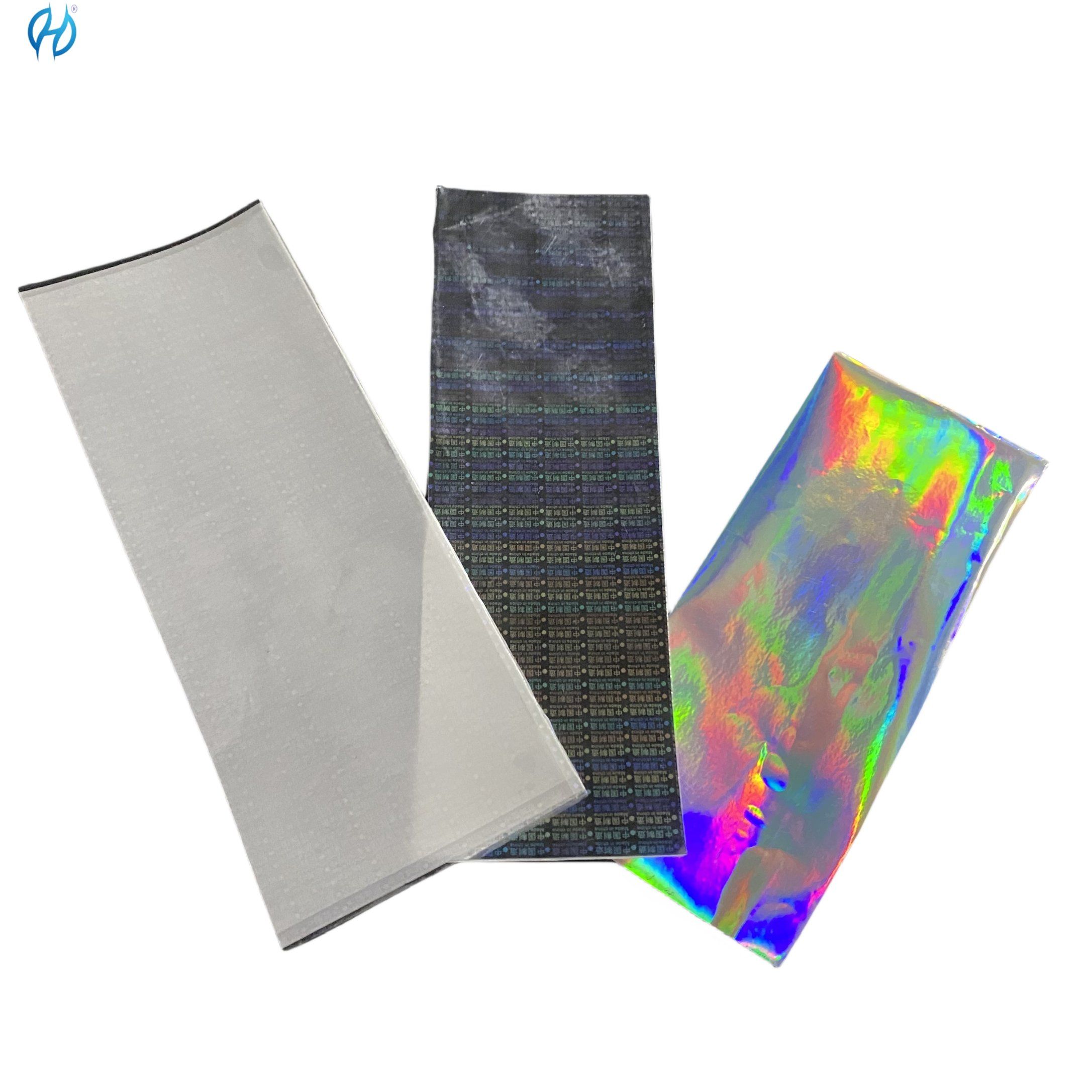
How VOID Labels Work
A void label carries a hidden message in its adhesive. When someone peels the label, the adhesive separates from the face material and a "VOID" pattern stays behind on the surface, while the label itself shows a matching residue. The label cannot be reapplied without the tampering being obvious. This is a physical, irreversible indicator, which is why void labels are used as warranty seals and carton seals rather than as decorative stickers.
Two construction families cover most requirements. Single-layer void labels leave the VOID message on the applied surface; they suit flat packaging where the mark is acceptable. The second family is the double-layer anti-peel construction: the top layer peels away to reveal information printed beneath, and a peeled label cannot be reapplied cleanly. A short guide to tamper-evident versus tamper-proof versus void constructions helps clarify which behavior your specification actually needs.
Matching the Sticker to the Application
Warranty seals are usually small, die-cut to fit a screw recess, battery cover, or joint line, and printed with a serial number or QR code so the seal can be logged. Carton seals are larger, applied across a flap seam, and need enough adhesion to grip corrugated board without tearing it on legitimate opening. Electronics applications call for low-residue adhesives on housings, screens, and connectors, and often a QR code for authentication as well as tamper evidence.
The red screen-print QR code VOID sticker combines a printed QR code with void-release behavior, so a single sticker carries both authentication and tamper evidence. It is a common format for warranty seals on consumer electronics and for carton seals where the code is scanned at goods-in.
Material choice
Paper facestock is the standard option for void labels. It prints cleanly for text, serial numbers, and QR codes, takes well to screen printing, and keeps cost low at volume. For curved or high-shrink surfaces, discuss adhesive and facestock with the factory before specifying, since a paper label that lifts at an edge is a false alarm waiting to happen.
Ordering Void Labels: Volume and Pricing
Void labels are priced by volume, and the tiers below are the figures for the VOID open label category. The full price table for the product itself sits on the void security labels product page.
| Volume | Price |
|---|---|
| 100,000–499,999 labels | US$0.007 per label |
| 500,000–999,999 labels | US$0.005 per label |
| 1,000,000+ labels | US$0.003 per label |
| Item | Detail |
|---|---|
| Material | Paper facestock |
| Sample | US$0.01 per piece |
| Red screen-print QR code VOID sticker | US$0.03–0.10 per piece, MOQ 10,000 |
| Typical uses | Warranty seals, carton seals, electronics |
Monthly capacity runs from 510,000 to 1,000,000 labels, so orders at the top tier are within normal scheduling. With 60+ anti-counterfeiting technologies in-house, the same factory can add serialization, laser colour-changing effects, or other features to a void label if the application calls for more than a plain VOID message.
What drives the price
Three variables move the unit price more than anything else: order quantity, die-cut complexity, and added print. A plain rectangular paper void label at a million pieces sits at the bottom of the range; a small custom shape with serialized print sits higher. If you are comparing quotes, specify all three so the comparison is like for like.
Specifying a Warranty Void Sticker
A workable specification covers the applied surface, the message or pattern required, the die-cut size and shape, the print content, and the packing format. Send a sample of the actual surface, or a photo with the material named, because adhesion behavior on painted metal differs from behavior on corrugated board.
For carton seals, confirm whether the seal is applied by hand or by machine; that determines liner and roll format. For warranty seals, confirm whether the seal must survive a specific handling period, since a void label that triggers too easily produces false warranty claims. Bringing these details to the first conversation shortens sampling considerably.
Request a Quote
Send your surface material, size, artwork, quantity, and target price tier, and the factory will confirm feasibility and sampling. Start with the void security labels product page for the full price table, or contact the team directly with your specification. If the application sits between two constructions, mention that as well; the response can compare them against your surface rather than guessing.
FAQ
What is the difference between a void label and a warranty seal?
They use the same release mechanism: peeling leaves a VOID message behind. "Warranty seal" describes the use, not a different product, so the choice comes down to size, surface, and print content rather than category.
Can void labels be custom printed with a logo or QR code?
Yes. Paper facestock prints cleanly for logos, serial numbers, and QR codes, and the red screen-print QR code VOID sticker is a standard format that combines a printed code with void release. Artwork and die-cut shape are confirmed at sampling.
What is the minimum order and sample cost?
The red screen-print QR code VOID sticker has an MOQ of 10,000 pieces at US$0.03–0.10 each. Standard void open labels are quoted from the volume tiers above, and samples are US$0.01 per piece.
Request a Quote
Tell us the label type, size and quantity. Zhao Hua's team replies with construction options, sampling and a volume price.
Request a Quote WhatsApp +86 136 7009 2422