What a Latent Image Label Does
A latent image label hides a mark that is not visible under normal diffuse lighting. The image appears only when the label is viewed at a specific angle or tilted under a concentrated light source. Because the image is created by the surface structure rather than by printed ink, it cannot be reproduced by ordinary scanning and reprinting — a photocopy or a desktop printout shows a blank or distorted area where the hidden mark should be.
Shenzhen Huaxin Anti-Counterfeiting Technology Co., Ltd. produces latent image labels within a range of more than 60 anti-counterfeiting technologies, including Japanese latent image technology as named in the factory's technology range. The feature is usually one layer of a combined construction rather than a standalone product, which is why most projects start with a conversation about the substrate, the application surface, and the inspection routine the brand or its field staff will actually use.
Refractive Security Labels: How They Differ
A refractive security label uses a micro-structured or lens-based surface to bend and redirect light. The visible effect is a shifting, animated, or depth-like image that changes as the label is tilted. Refractive features are visually obvious and are often chosen when the person checking the product is a consumer, a retail clerk, or a customs officer who will not carry a magnifier or a UV lamp.
The trade-off is straightforward: refractive effects are easier to see but also easier to notice and attempt to imitate than a well-executed latent image. In practice, the two features complement each other. A label that combines a refractive element on the surface with a latent image in the construction gives a fast first check for anyone handling the product and a slower, harder-to-copy check for an investigator or an authorized inspector.
Common Constructions and Combinations
Latent and refractive features are rarely specified on their own. Based on the factory's product range, they are typically combined with double-layer and laser constructions:
- Double-layer latent image label — the latent feature sits within a layered construction, which supports tamper evidence and anti-peel behavior alongside the hidden image.
- Latent and refractive combined with double-layer — a surface-level refractive effect plus a hidden image in the same label, so a single label serves both fast and slow inspection.
- Latent and refractive combined with laser — laser-originated optical effects paired with hidden-image elements for a construction with several distinct visual checks.
If your project involves tamper evidence, the double-layer anti-peel label range is the natural starting point, since peel behavior and optical features have to be engineered together rather than added in sequence. Reviewing the broader security labels range first will help you see which feature families can be stacked on one construction before you commit to a design.
Matching the Feature to the Inspection Routine
The most common specification error is choosing a feature that the end user cannot check. Before requesting samples, define three things:
- Who inspects the product. A warehouse operator with a fixed light and a jig, a retailer under mixed store lighting, or a customer at home — each imposes different requirements on viewing angle and contrast.
- How the check is recorded. If inspectors must photograph the label, the feature has to read clearly through a phone camera, which is a different requirement from reading well to the naked eye.
- What happens after the first check. Single-use labels, labels that must survive shipping and handling, and labels applied to curved or textured surfaces all change how the construction is built.
Bringing these answers to the quotation stage shortens the back-and-forth considerably, because the factory can propose a construction instead of a menu of features.
Manufacturing Background and Capacity
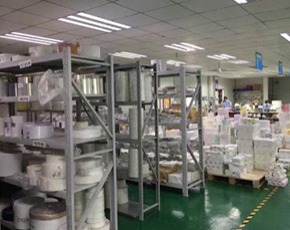
Shenzhen Huaxin Anti-Counterfeiting Technology Co., Ltd. has manufactured security labels in Shenzhen since 2008. The company has been audited by TÜV Rheinland (report MIC-ASR262171), employs 60–100 people, and operates a 1,500 m² factory with a monthly capacity of 510,000 to 1,000,000 labels. That capacity range suits both recurring program volumes and project-based orders, and it is stated here so you can judge fit before enquiring.
What Is Confirmed at Quotation
Because latent image and refractive features depend on the interaction between substrate, feature layer, and application surface, specifications are confirmed per project at quotation stage. No angle, resolution, minimum order quantity, or price is fixed in advance on this page; those figures are set once the construction and inspection method are agreed.
| Item | Detail |
|---|---|
| Manufacturer | Shenzhen Huaxin Anti-Counterfeiting Technology Co., Ltd., Shenzhen, since 2008 |
| Quality audit | TÜV Rheinland, report MIC-ASR262171 |
| Team and facility | 60–100 employees; 1,500 m² factory |
| Monthly capacity | 510,000–1,000,000 labels |
| Technology range | 60+ anti-counterfeiting technologies, including latent image (incl. Japanese latent image technology) and refractive security labels |
| Specifications | Confirmed per project at quotation stage |
Request a Quote for Your Latent Image Label Project
Send your application surface, expected inspection conditions, and target volumes, and the team will propose a construction from the latent image and refractive range for your review. You can explore the full security label range to compare feature families, look at double-layer anti-peel labels if tamper evidence is part of the brief, and contact the team directly to start a quotation.
FAQ
Can a latent image and a refractive effect appear on the same label?
Yes. The factory's range includes constructions that combine latent and refractive features with double-layer and laser builds. Whether both features fit on one label depends on the available surface area and the application method, so it is confirmed per project at quotation stage.
Is a latent image label visible under normal lighting?
No. A latent image is designed to stay hidden under diffuse light and appear only at a specific viewing angle or under concentrated light. This is what makes it useful against photocopying and ordinary reprinting, but it also means inspectors need a defined viewing method.
How do I get pricing and specifications?
Specifications, pricing, and minimum order quantities are confirmed per project after the construction and inspection method are agreed. Share your substrate, application surface, and expected volumes through the contact form and the team will respond with a proposal.
Request a Quote
Tell us the label type, size and quantity. Zhao Hua's team replies with construction options, sampling and a volume price.
Request a Quote WhatsApp +86 136 7009 2422