What a QR Code Security Label Does
A QR code security label combines a machine-readable code with physical anti-counterfeiting features so that each unit carries a unique, verifiable identity. The code is not printed as a static image. It is generated as variable data, meaning every label in a run holds a different serialized string tied to your production records.
Authentication happens in two directions. Your team scans the code during packing or warehousing to confirm the label belongs to the batch it claims. End users scan the same code with a phone and reach a verification result through a digital authentication service or a WeChat verification flow. Because the code is unique and serialized, a copied label fails when it is scanned a second time or when it appears outside its expected distribution path.
The physical layer matters as much as the data layer. A printed QR code alone can be photographed and reproduced. We build the code into substrates and finishes that are difficult to duplicate: UV fluorescent inks, hot-stamping foils and holographic layers that add visual and machine-verifiable checks at the point of inspection.
Label Types We Manufacture
Our variable data QR label range covers three constructions, each suited to a different balance of cost, security level and application surface.
Four-color variable QR labels. These carry variable QR codes printed in up to four colors using our color variable QR-code inkjet printers. They suit cartons, labels and printed packaging where a clear, high-contrast code is needed and the primary goal is serialization and tracking. Typical price is US$0.10-0.20 per label at a minimum order of 10,000 pieces.
Hot-stamping variable QR UV fluorescent labels. Here the variable QR code is combined with hot-stamping and a UV fluorescent element. Under normal light the label reads as a branded mark; under UV inspection the fluorescent feature confirms authenticity. This construction is common on high-value consumer goods, cosmetics and electronics accessories. Price range is US$0.03-0.10 per label.
Holographic hot-stamping QR barcode tracking labels. These combine a holographic hot-stamping layer with a variable QR code and a barcode, so the same label supports both optical verification and standard barcode scanning at logistics checkpoints. Price range is US$0.03-0.10 per label.
For brands that also need concealed codes for consumer verification, our scratch-off security labels pair well with a visible QR layer on the same package.
Specification and Pricing Reference
| Item | Detail |
|---|---|
| Four-color variable QR labels | US$0.10-0.20 per label, MOQ 10,000 |
| Hot-stamping variable QR UV fluorescent labels | US$0.03-0.10 per label |
| Holographic hot-stamping QR barcode tracking labels | US$0.03-0.10 per label |
| Variable data printing equipment | 3 color variable QR-code inkjet printers |
| Monthly capacity | 510,000-1,000,000 labels |
| Anti-counterfeiting technologies available | 60+ |
Figures above are reference ranges. Final pricing depends on label size, substrate, finish and the data service attached to the code.
Matching the QR Code Security Label to Your Production Line
Label format should follow the applicator, not the other way around. If you apply by hand, sheet or roll format with generous spacing is easier to handle. If you run an automatic labeler, confirm the web width, core diameter, gap and orientation before tooling begins, because variable-data runs cannot be re-pitched cheaply once printing starts.
Consider the surface as well. Holographic and hot-stamping constructions need a reasonably smooth face to bond reliably; textured or recycled board may require a different adhesive. For products that are exposed to moisture, abrasion or handling, specify a laminate over the code area so the QR remains scannable through the product's life.
Data design deserves the same attention. Decide early whether the code resolves to a public verification page, a WeChat verification flow, or an internal tracking record. If a single label must serve both consumer verification and warehouse scanning, the holographic barcode tracking construction lets one label carry a QR for users and a barcode for logistics.
Digital Authentication and Verification Flow
A serialized code is only useful if the data behind it is managed. In a QR anti-counterfeiting program each code is printed with a unique identifier, and the buyer’s verification system can return a result the scanning party can act on: authentic and first scan, authentic but already scanned, or unrecognized. We print the labels; the verification logic sits in the buyer’s system.
For brands selling through WeChat channels, verification can be delivered through a WeChat verification flow, which reduces friction for consumers who are already inside the app. For export markets, a standard web-based digital authentication page works across devices. Either way, the label is the physical carrier, and the buyer's verification system is the decision layer.
We also produce variable data QR labels as a broader category if your program needs serialized codes without the added optical features.
Manufacturing Background and Capacity
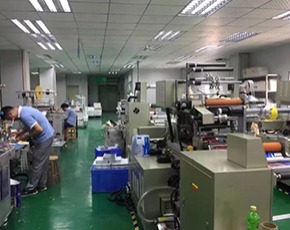
Shenzhen Huaxin Anti-Counterfeiting Technology Co., Ltd. has manufactured security labels in Shenzhen since 2008. We operate a 1,500 m2 factory with 60-100 employees and a monthly capacity of 510,000-1,000,000 labels. Our operations have been audited by TÜV Rheinland (report MIC-ASR262171).
Our technology portfolio covers more than 60 anti-counterfeiting technologies, including QR anti-counterfeiting, digital authentication, barcode and WeChat verification, which allows us to combine variable data with physical security features on a single label rather than sourcing them separately.
Request a Quote
To price a QR code security label program, send us your label size, substrate, application method, estimated annual quantity and the verification flow you plan to use. We will confirm the suitable construction and return a quotation with samples for your line trial. Start with our contact page or review the variable data QR label range before you write the specification.
FAQ
What is the minimum order quantity for a QR code security label?
For four-color variable QR labels the minimum order is 10,000 pieces. Hot-stamping and holographic QR constructions also start from a minimum order of 10,000 pieces; share your quantity and we will confirm the construction for your run.
Can the QR code be verified by consumers, not just warehouse staff?
Yes. Codes can resolve to a public digital authentication page or a WeChat verification flow, returning a result the consumer can read directly. The same label can also carry a barcode for internal tracking.
How do I know which construction suits my product?
It depends on your surface, applicator and the level of visual security you need. Four-color variable QR labels suit general serialization; UV fluorescent and holographic constructions add optical checks for higher-risk products. Send samples of your packaging and we will recommend a format.
Request a Quote
Tell us the label type, size and quantity. Zhao Hua's team replies with construction options, sampling and a volume price.
Request a Quote WhatsApp +86 136 7009 2422