What a Magnetic Security Label Is
A magnetic security label carries a magnetic feature that is applied to a product, carton or document. The authentication layer is covert: it is not intended to be seen or recognised by an end user, but to be read by a dedicated verification device at a controlled point in the supply chain — goods-in inspection, a distribution hub, a customs check or a field audit.
The term covers a family of approaches rather than a single construction. What they share is that the security feature is verified by an instrument rather than by eye, and that the reading is objective: the device checks the feature against its expected response instead of relying on an inspector's judgement.
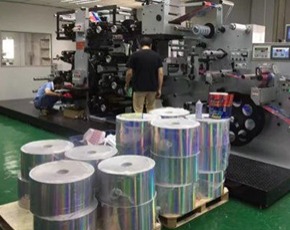
Shenzhen Huaxin Anti-Counterfeiting Technology Co., Ltd. has manufactured security labels in Shenzhen since 2008, and magnetic security labels are one of the factory's listed product categories. The company's technology portfolio runs to more than 60 anti-counterfeiting technologies, and MR (magnetic resonance) is one of them. This page describes the technology at concept level only; the construction and reading method for a specific order are agreed per project.
Why Machine-Verified Covert Authentication Matters
Overt features — holograms, colour-changing inks, tamper-evident seals — do their job in front of the customer. They deter casual copying and give a buyer a visible reason to trust the pack. Their weakness is that they can be studied, imitated or bypassed by someone with enough time and the right equipment.
Covert, machine-verified features work on a different principle. Because the authentication layer is not advertised, a counterfeiter does not know it is there to replicate it, and because verification requires a reader, a copied label cannot be confirmed as genuine even if the printed appearance is convincing. For brands facing organised infringement rather than opportunistic copying, that combination — invisible to the public, objective to the inspector — is the point of adding a magnetic security label to an existing label or seal.
It also changes how authentication is documented. A device-based check can be tied to a specific inspection point and a specific batch, which is useful when a brand needs to show that goods were verified at a particular stage rather than simply assert that they were genuine.
How Buyers Scope a Magnetic Security Label Project
A magnetic label is not a catalogue item. It is specified against the product it protects and the process that will verify it, so scoping usually runs through four decisions:
- Where the label goes. The substrate matters — a carton, a bottle, a folded leaflet and a hang tag each impose different constraints on how a magnetic layer can be carried. The label's dimensions and its position on the pack follow from that.
- Artwork and the overt layer. Most projects combine the covert magnetic feature with visible print: brand artwork, a serial number, a QR code or a tamper-evident construction. Artwork is confirmed early because it determines the print process and the finished appearance.
- Verification equipment. The reader is part of the system, not an afterthought. Buyers need to know how many inspection points will be equipped, who operates the device, and what happens when a label fails a check. The verification setup is scoped together with the label specification at quotation stage.
- Volumes and delivery. Order quantities, reprint cycles and delivery scheduling are agreed at quotation, together with the specification. The factory's stated monthly capacity of 510,000 to 1,000,000 labels gives an indication of the scale it is set up to handle; it is not a commitment for any individual order.
Because these four decisions are interdependent, the practical route is to bring the application and the verification requirement to the manufacturer first, and let the label specification follow. Buyers who start from a fixed label size and work backwards usually have to revisit the reading step.
Manufacturing Background and Quality Assurance
The factory operates from a 1,500 m² site in Shenzhen with 60–100 employees. It has been audited by TÜV Rheinland (report MIC-ASR262171), which gives procurement teams an independently verified starting point when assessing a new supplier. For brands building a multi-layer programme, the same supplier can produce the overt security labels and the covert magnetic element together, which simplifies artwork control and colour consistency across the pack.
The broader anti-counterfeiting technologies portfolio is relevant here for a practical reason: a magnetic security label is rarely deployed alone. It sits alongside tamper-evident seals, serialisation or other covert markers, and a supplier who can discuss the combination is better placed to advise on which layer does which job.
FAQ
Can a magnetic security label be read without special equipment?
No. The authentication layer is covert and is verified with a dedicated reading device. That is the intended advantage — the feature is not visible or recognisable to someone inspecting the pack by eye, so it is harder to identify and replicate.
Does the label replace a hologram or tamper-evident seal?
Usually not. Most programmes use a magnetic label as a covert layer beneath an overt feature such as a hologram or seal. The overt feature handles customer reassurance and deterrence; the magnetic layer provides machine-verified confirmation at inspection points.
What information do I need to provide to get a quotation?
The application (what product or pack the label goes on), the artwork or a description of the visible layer, where and how verification will take place, and the volumes you expect. With those, the manufacturer can confirm the specification and pricing, with the verification requirement defined as part of the project scope.
Request a Quote for Your Magnetic Security Label Project
To move from concept to a confirmed specification, send us your application details, artwork requirements and expected volumes through our contact page, and our team will respond with a quotation covering the label specification and the verification requirement. If you are still comparing authentication options, the security labels overview and the anti-counterfeiting technologies list are useful starting points for the discussion.
Request a Quote
Tell us the label type, size and quantity. Zhao Hua's team replies with construction options, sampling and a volume price.
Request a Quote WhatsApp +86 136 7009 2422