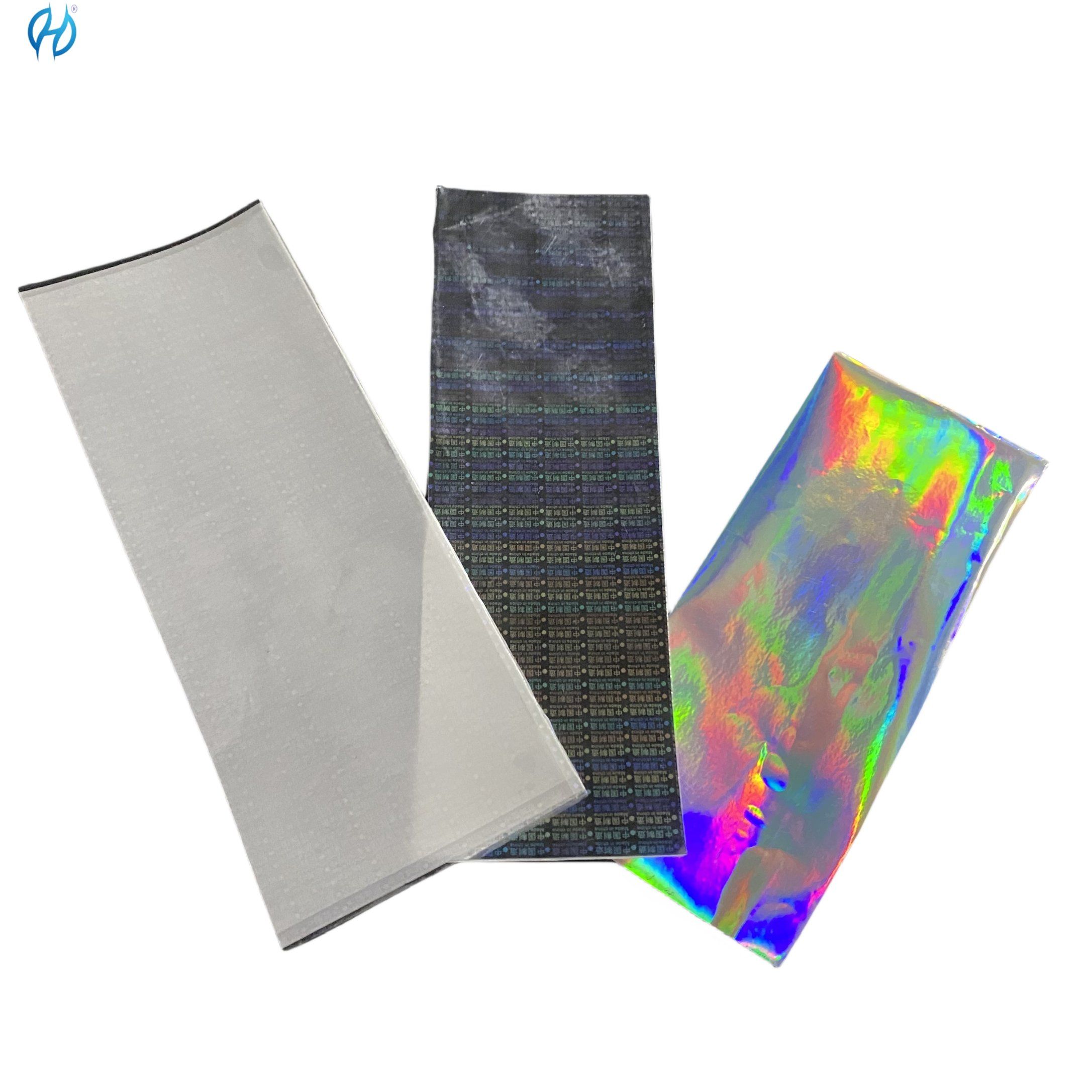
What a Warranty Void If Removed Sticker Actually Does
A warranty void if removed sticker is a tamper-evident label built on a simple mechanic: when someone peels it, the label does not come away cleanly. Instead, the adhesive splits in a controlled way, and a hidden VOID message transfers onto the surface underneath — or the label face itself delaminates and leaves a visible residue pattern on the product. Either way, the removal attempt leaves a mark that cannot be reversed without destroying the label.
This is the core value of the product. The sticker is not a lock and it is not a sensor. It is an evidence device. It records that an attempt was made to open a housing, lift a cover, or back out a screw. When a unit comes back for service, the state of the label tells the receiving team whether the enclosure was disturbed after it left the factory.
Two transfer mechanics are common, and buyers should specify which one they need:
- Substrate transfer (residue on the product): The VOID message stays on the housing when the label is lifted. This is the more permanent record, but it can be undesirable on cosmetic surfaces or on products that may be refurbished.
- Face-stock delamination (message on the label): The label splits internally so the word VOID appears in the label itself, while the housing stays relatively clean. This suits products where the surface finish matters.
For a broader look at how these constructions fit into a tamper-evident program, see our range of VOID security labels.
Where to Place a Warranty Void If Removed Sticker
Placement decides whether the label does its job. A VOID sticker sitting in the middle of a flat panel proves very little — someone can remove it, open the unit elsewhere, and replace it. The label must bridge the boundary that a technician would need to cross to gain access.
Practical placement patterns:
Over seams and parting lines
Apply the label so it spans the gap between two housing halves or between a cover and a base. Any separation of the two parts will stretch or split the label. Keep the label narrow enough to conform to the seam and long enough that it cannot be peeled from one end without visible damage.
Across screw heads and recesses
For serviceable enclosures, a small VOID label over a recessed screw is a common and effective pattern. The label should overlap the screw head and the surrounding housing so that backing the screw out tears the label. For deeper counterbores, a die-cut disc that sits inside the recess works better than a flat rectangle that bridges air.
On battery doors, ports, and expansion slots
Where access is through a door rather than a seam, place the label so it crosses the door edge onto the body. The same logic applies to memory slots, SIM trays, and connector covers on equipment where field access is restricted.
On calibration and inspection points
Instruments often carry adjustment points that must not be touched outside a calibration cycle. A VOID label across the adjustment cover gives the service team a clear indication of unauthorized adjustment.
A practical note on surface preparation: VOID constructions are pressure-sensitive and need a clean, dry, untextured surface to bond reliably. On textured plastics, powder-coated metal, or surfaces with mold release agent, adhesion drops and false VOID readings become more likely. Test the chosen construction on the actual housing material before committing to a production run. If the housing is curved or the label must wrap a corner, specify a flexible face stock and confirm the die-cut shape against a physical sample. The product page for void security labels covers the common face-stock and adhesive combinations.
What the Label Proves — and What It Does Not
This is the part buyers most often get wrong. A warranty void if removed sticker is evidence, not enforcement. It does not change the warranty. It does not automatically void anything. Warranty terms are set entirely by the seller's written policy, and the label is simply one input that a service or claims team can use when assessing a return.
What the label does well:
- It makes casual access visible. A unit that has been opened without authorization will usually show it.
- It deters the most common forms of tampering because the attempt is obvious.
- It gives the receiving team a consistent, checkable signal at inbound inspection, which reduces disputes about condition.
- It documents the state of the enclosure at the point of shipment when the label is applied under controlled factory conditions.
What the label does not do:
- It does not prevent access. A determined person can open a housing, and skilled removal of certain constructions is possible. Labels raise the cost of undetected tampering; they do not eliminate it.
- It does not override consumer rights or local law. In many jurisdictions, warranty terms are constrained by statute regardless of what a sticker says. Sellers should have their own legal review of warranty language and claim handling. Nothing in this article is legal advice.
- It does not self-authenticate. A label can be copied. Serialization, custom VOID patterns, and controlled application help, but a sticker alone is not an authentication system.
- It does not diagnose the cause of failure. A broken label shows that access occurred, not what was done or whether it caused the fault.
The mature way to use these labels is as one element of a claims process: label condition recorded at inbound, paired with serial number tracking and a written policy that defines what happens in each case. When the policy and the label agree, disputes get shorter.
Choosing the Right Construction for Your Product
Four variables drive most of the specification:
1. Surface and adhesion. Smooth ABS, polycarbonate, anodized aluminum, and painted steel all behave differently. Confirm the adhesive against the real housing material, including any mold release or coating.
2. Transfer type. Decide whether you want residue on the product (substrate transfer) or a clean housing with the message in the label (face-stock delamination). This choice affects both the tamper record and the refurbishment workflow.
3. Size and shape. Seam labels tend to be narrow rectangles; screw labels are often small discs or squares. Custom die-cut shapes let you follow a seam or fit a recess without bridging air.
4. Environment. Equipment that ships through heat, humidity, or cold storage needs an adhesive rated for that range. High-heat enclosures and outdoor equipment are the usual failure points, and they should be tested rather than assumed.
For buyers running a first specification, the practical sequence is: identify the access points, choose the placement pattern for each, select transfer type, then test on real housings before setting the drawing. A sample order is the cheapest way to catch an adhesion problem before it reaches a production line.
Volume Pricing and Samples
Anchored pricing from Shenzhen Huaxin for VOID labels is tiered by volume:
| Volume | Price |
|---|---|
| Volume tier 1 | US$0.007 per piece |
| Volume tier 2 | US$0.005 per piece |
| Volume tier 3 | US$0.003 per piece |
| Sample | US$0.01 per piece |
| Material for the priced product | Paper |
Tier boundaries, lead times, and tooling for custom die-cut shapes are confirmed at quotation. Because unit cost falls meaningfully across the tiers, it is worth modeling annual usage rather than ordering month to month — a label that costs a fraction of a cent at volume is a small line item against the cost of a disputed warranty claim, but only if the specification is right. Order samples first, apply them to real housings, and test removal before committing to a tier.
If you are comparing constructions or need help matching a label to a specific seam or screw pattern, talk to our team with the housing material, access points, and expected annual volume.
FAQ
Does a warranty void if removed sticker legally void a warranty?
No — the sticker itself does not change any legal rights. Warranty terms are set by the seller's written policy and are subject to the consumer protection law of the relevant market. The label provides evidence of tampering that a seller's claims process can use; whether and how that evidence affects a claim is a policy and legal question for the seller, not a function of the sticker.
Can a VOID label be removed and reapplied without leaving a trace?
For standard constructions, no — the adhesive is designed to split so that removal leaves either a VOID message on the housing or a delaminated label face. Skilled attempts on some constructions can reduce the visibility of the damage, which is why labels are described as evidence rather than prevention. Using serialized or custom-pattern labels and inspecting at inbound adds further control.
Where should I place the label on an enclosure with both a seam and screws?
Place one label across the main parting seam and separate small labels over the screws that must be backed out for service access. The goal is that every realistic access route crosses a label. Confirm the die-cut shapes against the actual housing — recessed screws often need a disc that sits inside the recess rather than a flat rectangle bridging the gap.
Request a Quote
Tell us the label type, size and quantity. Zhao Hua's team replies with construction options, sampling and a volume price.
Request a Quote WhatsApp +86 136 7009 2422