What Decorative Hologram Stickers Actually Are
The word "hologram" covers a very wide range of products, and most of the stickers sold online and through general packaging channels are decorative. A decorative hologram sticker is produced from a stock or generic holographic master — a repeating rainbow pattern, a standard dot matrix, a generic starburst or geometric effect. The pattern is not unique to any company; thousands of other buyers can order the same visual effect from the same catalogue.
Because the master is generic, decorative hologram stickers carry no security value. They are sold to anyone, in any quantity the seller will accept, with no registration of the artwork, no record of who bought what, and no control over how many are produced. Anyone who obtains a sample can approach another converter and have the same look reproduced. In practice, a decorative hologram is a decoration: useful for shelf appeal, gift packaging, event branding, or a premium look on a retail box, but not a tool for authentication or tamper evidence.
This is not a criticism of decorative products — they serve a legitimate purpose and are priced accordingly. The problem arises when buyers assume that any shiny, rainbow-reflective sticker will deter counterfeiting. It will not. A counterfeiter can buy the same stock hologram or replicate a generic pattern without difficulty.
How Security Holograms Are Different
Security holograms are built on a different production model. The differences are structural, not cosmetic, and they show up at every stage from artwork to delivery.
Custom origination and registered artwork
A true security hologram starts with custom origination: a unique master is created for the customer's artwork, logo, or design. In a properly run custom program, that master is produced for one customer’s artwork and is not sold on to others, and the artwork is controlled: the producer records who owns the design and who is authorized to order it. Reorders are tied back to that record rather than to a public catalogue.
This registration step is what makes a security hologram meaningfully different from a decorative one. If a counterfeiter wants to reproduce the sticker, they cannot simply buy the same stock pattern. They would need to recreate a custom optical master, which is a significantly higher barrier than copying a generic design.
Controlled production
Security holograms are produced under controlled conditions: quantity records, restricted access to masters, and accountability for production runs. The point is not secrecy for its own sake — it is traceability. When production is controlled, the legitimate brand owner can have reasonable confidence about how many authentic labels exist and where they went. Decorative holograms have no such controls because there is nothing to control; the pattern is public.
Verification features built into the label
Security holograms typically include overt and covert features that let a trained inspector — or in some cases any user — confirm authenticity. The most common are described in the next section.
Verification Features: Micro-Text, Hidden Images, and Kinetic Effects
The features below are what separate a security hologram from a decorative one in day-to-day use. Not every security label carries all of them, but these are the categories buyers should ask about.
Micro-text. Very small lettering — often legible only under magnification — can be embedded in the hologram design. Micro-text is difficult to reproduce accurately through counterfeiting methods such as scanning and reprinting, and it gives inspectors a fast, low-cost check.
Hidden images. Also called covert or latent images, these are visual elements that are not obvious at a glance and appear only at a specific viewing angle or under particular lighting. Because they are not visible in a casual photograph or a standard product image, they add a layer that a counterfeiter may not know exists, let alone replicate.
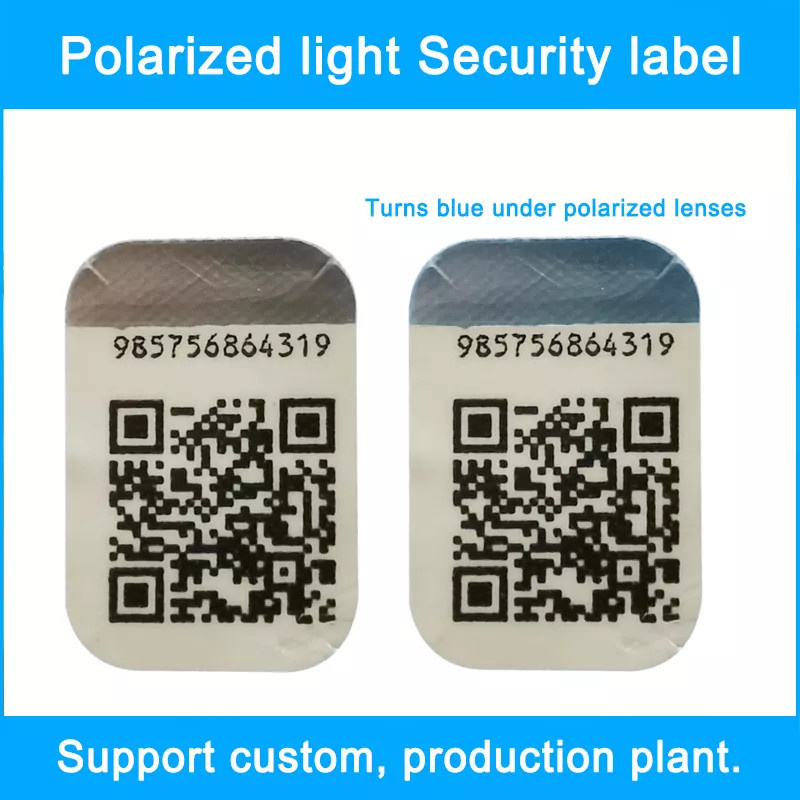
Kinetic effects. Kinetic features change as the sticker is tilted — a movement, a colour shift, or a transition between images. These effects are a function of the optical structure of the hologram rather than printed ink, which makes them hard to duplicate with ordinary printing equipment. They also give end users a simple way to check a product without tools.
The right combination depends on your threat model and your inspection process. A brand whose field staff can carry a magnifier may lean on micro-text; a consumer-facing product may benefit more from an obvious kinetic effect that anyone can see. It is worth discussing your verification workflow with the manufacturer before artwork is finalized, because some features need to be designed in from the start.
Matching the Hologram Type to the Job
The practical question is not which type is "better" but which type fits the application. Decorative hologram stickers are appropriate when the goal is appearance: seasonal packaging, promotional inserts, event merchandise, or a holographic accent on a retail box where authentication is not a concern. They are inexpensive, widely available, and fast to source.
Security holograms are appropriate when the sticker is part of an authentication or tamper-evidence program: warranty seals, product authentication labels, pharmaceutical and electronics packaging, certificates, and any situation where a counterfeit label would cause real harm. In these cases the custom origination and controlled production are not overhead — they are the product.
A useful rule of thumb: if losing control of the sticker design would create a business problem, you need a security hologram. If the sticker is purely aesthetic, a decorative product will do the job at a lower cost.
What Security Hologram Stickers Cost
Pricing reflects the difference in production model. Decorative holograms benefit from shared masters and high-volume generic production; security holograms carry the cost of custom origination, registration, and controlled runs. As a manufacturer reference point, custom holographic laser stickers are typically quoted at US$0.03–0.08 per unit with a minimum order quantity of 10,000, while 3D hologram stickers run US$0.15–0.30 per unit. Exact pricing depends on size, material, feature set, and order volume, and should be confirmed against your specification.
| Item | Detail |
|---|---|
| Custom holographic laser stickers | US$0.03–0.08 per unit |
| Minimum order quantity (custom holographic laser stickers) | 10,000 units |
| 3D hologram stickers | US$0.15–0.30 per unit |
Two things are worth noting about these figures. First, the MOQ is a real constraint: security hologram programs are built around controlled runs; trial orders are accepted, but unit economics still follow the MOQ. Second, the price range within each category is wide because the feature set drives cost — a label with micro-text and a kinetic effect is a different product from a plain custom holographic label, even at the same size.
If you are comparing quotes, make sure you are comparing like with like. A very low quote for a "security hologram" is often a decorative stock product with security-sounding language attached. Ask specifically whether the master is custom, whether the artwork is registered, and which verification features are included.
Specifying Your Order Without Overpaying
A few practical steps will keep you from paying for security features you do not need — or, worse, buying decorative stickers while believing you have protection.
Start by defining the threat. Are you defending against casual copying, organized counterfeiting, or internal diversion? The answer determines whether you need custom origination at all, and which verification features are worth specifying.
Next, define the inspection process. Who will check the label, with what tools, and how often? Features that nobody checks add cost without adding protection. Features that fit an existing workflow — a quick tilt test at goods-in, a magnifier check during audits — earn their keep.
Then confirm the production controls. Ask how the master is stored, how reorders are authorized, and what records exist for production quantities. A supplier who cannot answer these questions clearly is not operating a security program, whatever the label looks like.
Finally, get the specification in writing: dimensions, material, adhesive, feature list, and MOQ. For custom work, review the custom hologram sticker options before artwork is locked, since changes after origination are costly. If your application also involves tamper evidence or brand-protection labels beyond holograms, it is worth reviewing the broader range of holographic security labels so the whole program is consistent.
FAQ
Are decorative hologram stickers ever acceptable for product authentication?
No. Decorative hologram stickers are made from generic masters, sold to anyone, and not registered to a specific owner, so anyone can obtain or reproduce the same pattern. They may look similar to security holograms, but they provide no meaningful barrier to counterfeiting. If authentication matters, specify a custom-originated, registered security hologram.
What is the difference between custom origination and buying a stock hologram design?
Custom origination means a unique master is created for your artwork, registered to you, and not resold to other buyers. A stock hologram uses a generic pattern available to anyone. The custom route costs more upfront and typically carries a minimum order quantity, but it is the only way to have a design that a counterfeiter cannot simply buy from a catalogue.
Which verification features should I ask for first?
It depends on how the label will be checked. Micro-text is a strong choice when inspectors can use magnification; hidden images add a layer that casual copiers may not notice; kinetic effects are the easiest for untrained users to verify by tilting the label. Many programs combine two or three. Discuss your inspection workflow with the manufacturer before finalizing artwork, because features must be designed in from the start.
If you are ready to specify a security hologram program — or want help deciding whether a decorative product is sufficient for your packaging — send your artwork, dimensions, and expected volumes through the contact page and request a quote. Include your target features and inspection process, and the team can confirm pricing, MOQ, and lead time against your specification.
Request a Quote
Tell us the label type, size and quantity. Zhao Hua's team replies with construction options, sampling and a volume price.
Request a Quote WhatsApp +86 136 7009 2422