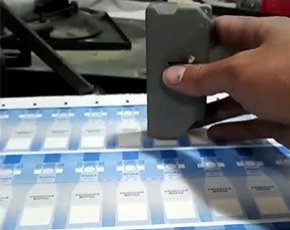
What Security Printing Actually Means
Security printing is the branch of commercial printing that builds authentication features directly into a document or label so that copying, alteration or forgery becomes difficult, expensive or immediately visible. It differs from ordinary printing in one key respect: the goal is not only to reproduce an image accurately, but to make that image behave in ways a photocopier, scanner or desktop printer cannot replicate.
A useful way to think about it is in layers. Most effective security print jobs combine three or four features that work at different levels of inspection:
- Overt features — visible to anyone without tools. Holograms, color-changing ink and micro-text fall here.
- Covert features — require a simple tool such as a UV lamp. Fluorescent fibers and UV inks belong to this group.
- Forensic features — require laboratory equipment and are used mainly for dispute resolution.
The practical rule for buyers is that a single feature is a deterrent; a combination of features at different inspection levels is a system. A counterfeiter who can source the right paper rarely has the right ink, and one who can imitate the ink rarely has the right finishing equipment. The sections below walk through each layer in the order a job is actually specified.
Security Substrates: Paper and Film as the First Defense
Before a single drop of ink is applied, the material itself can carry authentication. Two substrate features are common enough to be considered standard for security printing.
Fluorescent fibers in paper
Security paper is manufactured with fine fibers — visible or invisible under normal light — embedded throughout the sheet during the pulp stage. Under a UV lamp the fibers glow in a defined color. Because they are distributed randomly through the thickness of the paper, not printed on the surface, they cannot be reproduced by scanning and reprinting. A counterfeiter working from a photocopy will produce a sheet with no fibers at all; one working from genuine stock will produce fibers, but usually in the wrong color or density if the stock was not sourced from the same mill.
For label buyers, the important questions are whether the fiber color is specified and controlled, and whether the substrate is used consistently across a product family. A fiber feature is only useful to an inspector if they know what "correct" looks like.
Security threads
A thread is a narrow strip — metallic, plastic or printed — embedded inside the paper during manufacture, either fully buried or windowed so it appears intermittently on the surface. Threads can carry micro-text, magnetic properties or color-shift effects. They are most associated with banknotes and certificates, but windowed threads also appear in tax stamps and high-value vouchers where the document must be verified by hand in the field.
Substrate features add cost per sheet and usually impose a minimum order on the paper itself, so they are specified where the value of a single document justifies it — certificates, stamps and controlled vouchers rather than everyday product labels.
Security Inks: The Most Flexible Layer
Inks are where most security printing programs do the bulk of their work, because ink features can be added to an existing label design without changing the substrate or the press. Two families matter most.
UV fluorescent inks are invisible or nearly invisible under normal light and fluoresce under a 365 nm UV lamp. They are used for hidden marks, serial-number overlays and machine-readable patterns. The advantage is that the mark does not disturb the visual design; the limitation is that verification requires a lamp, so UV features are covert by definition and work best alongside at least one overt feature.
Color-changing inks shift hue when the viewing angle changes — the effect comes from interference rather than from pigment, which is why it cannot be reproduced with a desktop printer or a color photocopier. Optically variable ink is the classic example and is normally reserved for the highest-value documents because of its cost. Color-changing effects are also achievable through hot-stamped foil, discussed below, which is often the more practical route for labels.
A third category — pen-reactive or solvent-reactive inks — is worth knowing about for vouchers and certificates, since it lets a clerk verify a document with a marker rather than a lamp. Whichever inks you choose, specify the verification method at the same time as the ink: a covert feature that nobody in the field knows how to check provides no protection.
Print Techniques That Resist Reproduction
The way an image is laid down can be as protective as the material it is laid on. Four techniques appear repeatedly in security printing specifications.
Offset printing and micro-text
Offset is a high-volume process in which ink is transferred from a plate to a rubber blanket and then to the substrate. It offers very high resolution at speed, which makes it the natural home for micro-text — type set so small (typically well under a millimeter) that it reads as a solid line to the naked eye and breaks down into illegible mush on a photocopy or scan. Micro-text is cheap to add once a job is on offset and is one of the highest value-per-cost features available.
Micro-text also pairs well with guilloche patterns — fine, interlocking line designs that are mathematically generated and extremely difficult to redraw. Both features are produced at the prepress stage, so adding them to an existing offset design is largely a matter of artwork work rather than new equipment.
Hot stamping
Hot stamping presses a heated die against a foil carrier, transferring a thin metallic or pigment layer onto the substrate under pressure. In security work it is used for two purposes: to apply holographic foil, and to create tactile elements such as embossed seals or raised serial numbers on certificates. The pressure and heat involved leave a physical impression that a photocopy cannot reproduce.
Holography
A hologram is a foil or label containing a micro-structured surface that produces a three-dimensional or color-shifting image. Holograms are the most widely recognized overt feature in the field, which is both their strength and their weakness: users know to look for one, but they also tend to trust any shiny patch. The effective use of holography is to combine a standard visual effect with a serialized or customized element — a unique number, a logo variation, a hidden image — so that the hologram itself becomes traceable.
Variable data and serialization
Variable data printing gives every item a unique identity: a serial number, a QR code, a batch code or a combination. On its own a serial number does not prevent copying, but it converts a counterfeit from an anonymous problem into a traceable one, and it enables the verification loop described in the next section. For labels and vouchers, variable QR code inkjet printing is typically the most flexible way to add this layer.
Finishing, Serialization and Verification
Finishing is the stage after printing, and it is where a security document becomes usable. Die-cutting determines the physical format — the shape of a label, the perforation line on a voucher, the cut of a stamp sheet — and the accuracy of the cut is itself a minor security feature, since poorly registered die-cutting is easy to spot against a genuine sample.
Variable data sits at the boundary between printing and finishing. The practical value comes from the verification loop: a QR code or serial number is recorded at production, and a checker later scans the item and confirms it against that record. This turns a printed feature into a database-backed one. It also means the security of the program depends on how the data is handled after printing, so agree the record-keeping and handover process before the job runs.
For manufacturer context, our own production line combines two eight-color PS plate offset presses, three hot-stamping die-cutters and three variable QR inkjet printers — which is to say offset printing, hot stamping and variable-data printing are production stages inside the factory rather than brokered out. We have also taken part in drafting work for China’s first national-grade standard on confidential anti-counterfeiting document printing (self-reported; no standard number is published), work that shapes how we approach feature selection and inspection criteria on customer jobs.
The table below summarizes the features discussed and where each is typically applied. It is a selection guide, not a price list; actual specification depends on artwork and volume.
| Item | Detail |
|---|---|
| Substrate feature | Fluorescent fibers in paper; security threads (buried or windowed) |
| Ink feature | UV fluorescent ink (covert, 365 nm lamp); color-changing ink (overt, angle-dependent) |
| Print technique | Offset with micro-text and guilloche; hot stamping; holography; variable data |
| Finishing | Die-cutting, variable data serialization and QR coding |
| Typical applications | Product labels, tax stamps, vouchers, certificates |
| Verification tools | Naked eye, UV lamp, angle inspection, QR scan against production record |
Choosing a Feature Set Without Overspending
The most common specification error is buying more security than the threat justifies, or buying features that nobody inspects. A workable approach is to answer three questions in order.
First, what is the attack? Casual copying of a voucher, diversion of tax stamps, and forgery of a qualification certificate are different problems with different economics. Second, who inspects, and with what? If verification happens at a retail counter, you need an overt feature and a simple scan; if it happens in a customs hall, a UV lamp is realistic; if it happens only in a dispute, forensic features are appropriate. Third, what is the unit value and volume? Substrate features and hot stamping carry per-unit cost that only makes sense above a certain document value, while micro-text and variable data scale more gently.
A defensible default for most B2B programs is one overt feature (holographic foil or color-changing element), one covert feature (UV ink or fluorescent fibers), micro-text in the artwork, and serialization — four layers at different inspection levels, each covering the others' gaps. From there, add substrate threads or forensic elements only where the document value or the regulatory context requires them.
If you are specifying security vouchers and certificates, the feature set usually needs to survive both manual inspection and a scan, since these documents are checked by people who are not print specialists. For tax stamps, the balance shifts toward substrate and covert features, because the stamp must be verifiable quickly and at scale.
FAQ
How many security features does a label actually need?
Two or three features at different inspection levels are usually enough to make casual copying uneconomic, provided each one is checked by someone in the supply chain. A single overt feature with no covert backup is the weakest common configuration, because it can be imitated convincingly enough to satisfy a quick glance. Adding features beyond that point increases cost faster than it increases protection.
Can security printing be added to an existing label design?
Most of the time, yes. Micro-text, guilloche patterns and UV inks are artwork and press settings, so they can be layered onto an existing design without changing its appearance under normal light. Hot stamping and holography require a die and add a production stage, which affects lead time and unit cost. Substrate features such as threads are the least flexible, because they have to be ordered as paper.
How do we verify a feature once it is in the field?
Match the verification method to the ink or substrate at the specification stage. UV features need a lamp of the correct wavelength, color-changing features need angle inspection, and serialized or QR-coded items need a record to check against. Train the people who will do the checking, and keep a genuine reference sample available — most field disputes are resolved by comparing against a known-good item rather than by laboratory analysis.
To discuss a specification for your label, stamp or certificate program, request a quote with your artwork, expected volume and the inspection conditions your team works under, and we will recommend a feature set that matches them.
Request a Quote
Tell us the label type, size and quantity. Zhao Hua's team replies with construction options, sampling and a volume price.
Request a Quote WhatsApp +86 136 7009 2422