How a unique QR code supports product authentication
A QR code is a two-dimensional symbol that carries a string of characters. In anti-counterfeiting use, the important word is *variable*: every label carries a different code, generated and printed as a unique serial. That single change separates a genuine authentication label from a decorative square that points to a homepage.
A typical verification flow looks like this:
- The brand generates a batch of unique codes and keeps a record of each one.
- The label printer produces labels where each printed code is different, and the code is tied to that batch and product line.
- The consumer or inspector scans the label with a phone camera or a brand app.
- The verification system checks the code against its records and returns one of several states: valid and not previously scanned, valid but already scanned, unknown, or flagged.
- The response may include product information, batch details, or a warning that the code has been reused.
The value of this flow comes from the record, not the graphic. A genuine scan tells the buyer something a printed logo cannot: this exact code exists in the brand's database, and it is being checked now. That is the core mechanism behind QR-based product authentication, and it is why variable data printing matters more than the QR symbol itself.
It also explains a limit buyers should understand early. A QR code proves that a code exists. It does not, by itself, prove that the physical product carrying it is genuine. A counterfeiter who copies a valid code onto a fake package will produce a scan that returns "valid" — until someone notices the same code appearing twice. This is the copying problem, and it deserves its own section.
The copying problem: why a static QR code is not enough
A static QR code is printed once and repeated on every unit. It usually points to a brand page, a product video, or a campaign landing page. It is cheap and easy to produce, and it offers almost no protection.
The reason is simple: a static code can be photographed and reprinted. A counterfeiter buys one genuine item, photographs the label, and reproduces the same square on a thousand fake boxes. Every scan works, because every scan reaches the same destination. Nothing in the flow distinguishes the original from the copy.
Variable codes raise the cost of copying but do not eliminate it. A counterfeiter can still photograph a single genuine label and reprint that one code on many units. The difference is that the duplicate scans become visible. If the verification system records each scan, the second, third, and hundredth scan of the same code can trigger an alert. The copy still exists, but it is now detectable, and the brand can act on it.
This is the honest framing: QR codes are a detection tool, not a physical barrier. They work best when the label itself is difficult to duplicate and the verification logic treats repeat scans as a signal rather than a rounding error. Buyers who expect a QR code alone to stop a determined counterfeiter will be disappointed. Buyers who combine a variable code with physical defenses and sensible scan rules get a system that makes copying expensive, slow, and visible.
Layering physical defenses with the QR code
The most effective approach combines the variable QR with features that are hard to reproduce and easy for a buyer to check by hand. The factory prints labels; the brand chooses which combination fits its product, channel, and budget.
Holograms
A hologram adds an optical element that is difficult to copy with a standard printer. Combined with a variable QR, it gives the buyer two things to check: the visual security feature and the code. A photocopied label fails the hologram test even if the QR scans correctly.
Scratch-off panels
A scratch-off layer hides the code until purchase. The buyer scratches the panel, scans the revealed code, and receives a result. If the panel is already scratched on arrival, that is itself a warning sign. Scratch-off also supports one-time verification logic, because the first scan after scratching can be treated as the expected event and later scans as suspicious.
VOID and tamper-evident constructions
A VOID label leaves a visible mark when removed. This matters for reuse attacks, where a counterfeiter peels a genuine label from a real product and applies it to a fake. Tamper-evident construction makes that transfer obvious and turns a clean scan into a visible red flag.
One-time verification logic
One-time verification means the system expects a code to be scanned once in normal use. The first scan returns a confident "genuine" result. Subsequent scans return a different message, such as "this code has already been verified," which alerts the buyer and the brand. This is a system concept rather than a label feature, but it changes what the label must carry: a unique code, printed cleanly enough for reliable scanning, with batch and serial data encoded.
Scan-count alerts
Scan-count alerts extend the same idea across a batch. If a single code is scanned far more often than a normal buyer would scan it, or if scans cluster in an unexpected geography, the brand receives a signal. Used well, this turns the label population into an early-warning network. It requires a verification system that records scans, which the brand or its technology partner operates; the label printer's job is to deliver accurate, unique, machine-readable codes.
None of these layers is expensive in isolation, and they reinforce each other. A hologram defeats photocopying. A scratch-off panel controls when the code becomes visible. A VOID construction defeats transfer. One-time logic and scan alerts turn repeated use into evidence. The QR code is the thread that ties them together.
Specifying variable QR labels for authentication
When you move from concept to purchase, the specification conversation should cover data, printing, materials, and finishing. The goal is a label that scans reliably on the first attempt, in the hands of a consumer, under real lighting and real packaging conditions.
Key decisions include:
- Data structure. Decide what each code encodes: a serial only, or a serial plus batch and date information. Longer payloads require denser symbols, which need better print resolution.
- Print method. Variable data is typically applied with inkjet printing, which allows each label to differ. For four-color variable QR labels, the code is printed as part of the colour print run rather than as a separate black-only overprint.
- Symbol size and contrast. A code that is too small or printed at low contrast will fail on older phones. Test with the actual devices your buyers use.
- Substrate and adhesive. Match the material to the surface and the environment: paper for cartons, synthetic films for damp or outdoor use, and the right adhesive for the package material.
- Finishing. Holograms, scratch-off layers, and VOID constructions are added at the finishing stage, so specify them together with the code rather than as an afterthought.
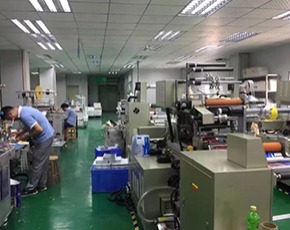
As a reference point for planning, the factory prints four-color variable QR labels in the range of US$0.10–0.20 per label at a minimum order quantity of 10,000, and runs three variable QR inkjet printers. These figures are useful for early budgeting; final pricing depends on size, material, and finishing, so treat them as a starting range rather than a quotation.
| Item | Detail |
|---|---|
| Product | Four-color variable QR labels |
| Price range | US$0.10–0.20 per label |
| Minimum order quantity | 10,000 labels |
| Variable QR production | Three color variable QR inkjet printers |
If your program needs a specific data format, a particular substrate, or a combination with hologram or scratch-off finishing, describe the requirement in your inquiry so the label construction can be matched to it. The QR code anti-counterfeit labels page covers the label formats used for authentication programs, and the variable data QR label page describes how unique codes are produced.
Common mistakes in QR authentication programs
Most failed programs fail for reasons that are visible before the first print run.
Treating the QR code as the whole system. A code without a verification record is just a link. Decide early who holds the database, how scans are recorded, and what the buyer sees.
Ignoring the first-scan experience. If the scan result is slow, confusing, or returns a generic homepage, buyers stop scanning. A clear result screen is part of the product.
Printing codes too small or too dense. A code that works in a proofing file may fail on a curved bottle or a low-cost phone. Test on the real package.
Leaving the label easy to remove. If the label can be peeled and reapplied, the code's uniqueness is worthless. Specify tamper-evident construction when reuse is a realistic risk.
Skipping the repeat-scan rules. Without one-time logic or scan alerts, duplicated codes go unnoticed. These rules are simple to define and cheap to operate relative to the cost of counterfeit returns.
Overlooking the human check. Train staff and, where possible, buyers to look at the physical feature — the hologram, the intact scratch panel, the VOID residue — not just the phone screen.
FAQ
What makes a QR code suitable for product authentication?
The code must be unique per label and tied to a record that the brand controls. A variable code printed on each unit, combined with a verification system that tracks scans, lets a buyer confirm that a specific code exists and whether it has been used before. A static code repeated on every unit provides a link but no authentication value.
Can a counterfeiter simply copy a genuine QR code?
Yes, a photograph of a genuine label can be reprinted. That is why the code should be combined with physical defenses such as a hologram, a scratch-off panel, or a VOID construction, and why the verification system should treat repeated scans of the same code as an alert. Copying becomes possible but detectable, which changes the economics for the counterfeiter.
Do I need special software to run a QR authentication program?
The brand needs a verification system that stores the issued codes and records scans; this is typically run by the brand or a technology partner, not by the label printer. The printer's role is to produce labels with accurate, unique, machine-readable codes and the finishing you specify. When requesting a quote, describe your data format and finishing needs so the label construction matches your program.
To discuss a label specification for your authentication program, request a quote with your code format, quantity, substrate, and finishing requirements.
Request a Quote
Tell us the label type, size and quantity. Zhao Hua's team replies with construction options, sampling and a volume price.
Request a Quote WhatsApp +86 136 7009 2422